

Astronex-World-5B
Astronex-World 1.0, a 5B controllable video world-model foundation on the Wan2.2-TI2V-5B prior. Given a text prompt or a first frame it predicts future visual states under frame-aligned camera trajectories, a 64-D continuous action stream with an embodiment identifier, and text events inserted partway through a rollout. One trunk, two forms — a bidirectional form with full temporal attention, and a causal form with block-causal attention and cross-block KV caching that streams block by block. 832x480 and 1280x704 at 24 fps.
All five training stages ran on two NVIDIA L20 48 GB GPUs, and the causal form streams 832x480 at 24 fps in real time on one. On WBench Full 289 it scores 70.0, above the 13.6B LongCat-Video and the 14B Helios and within one point of the 22B LTX-2.3.
Project page | Technical report | Code
Gallery
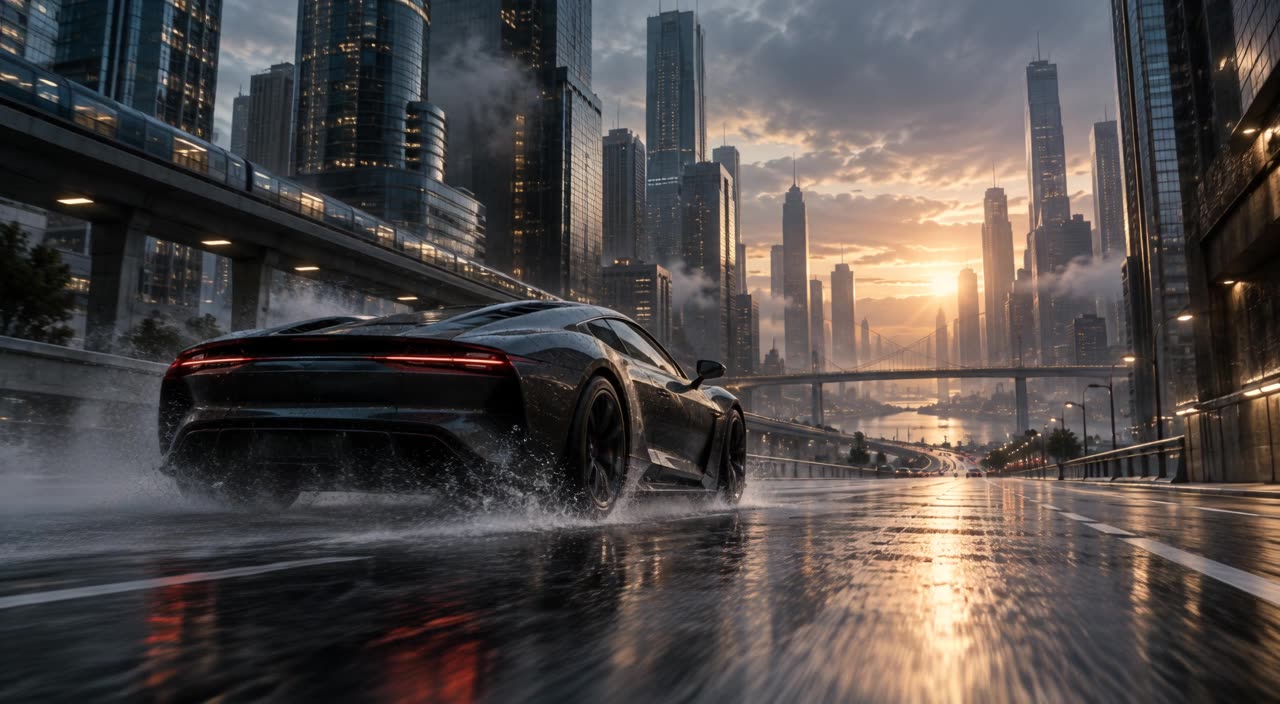
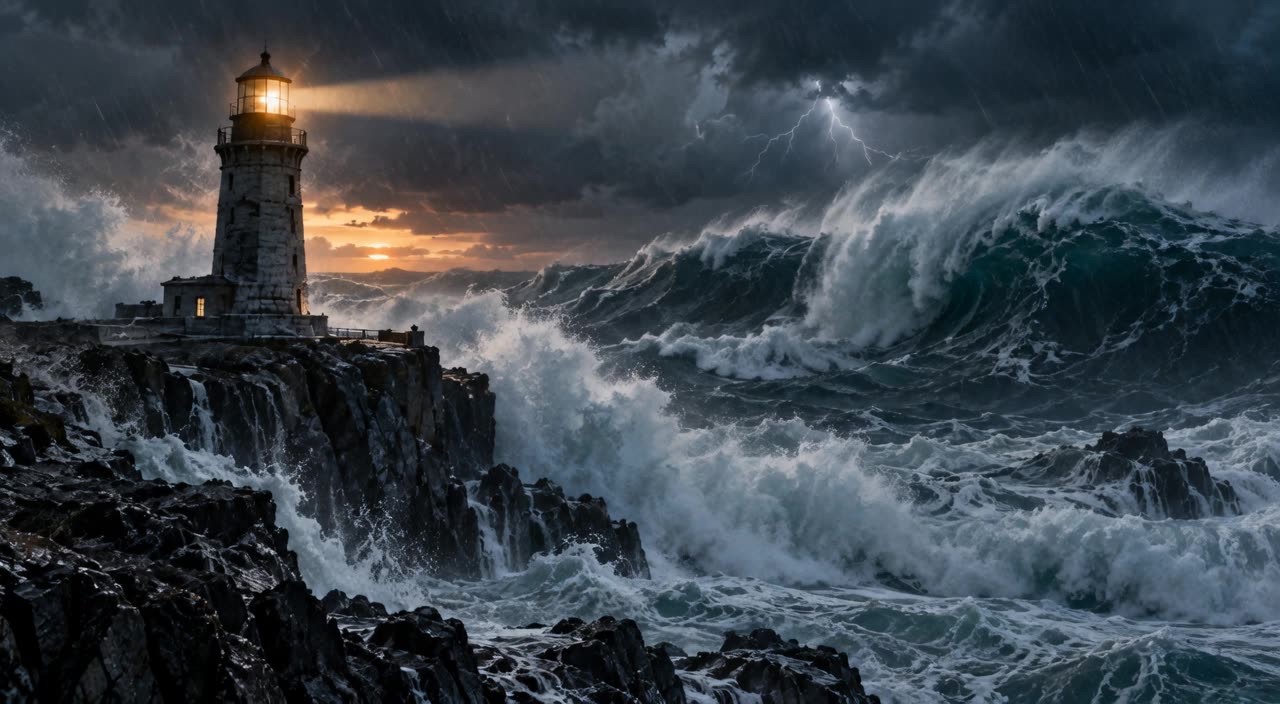
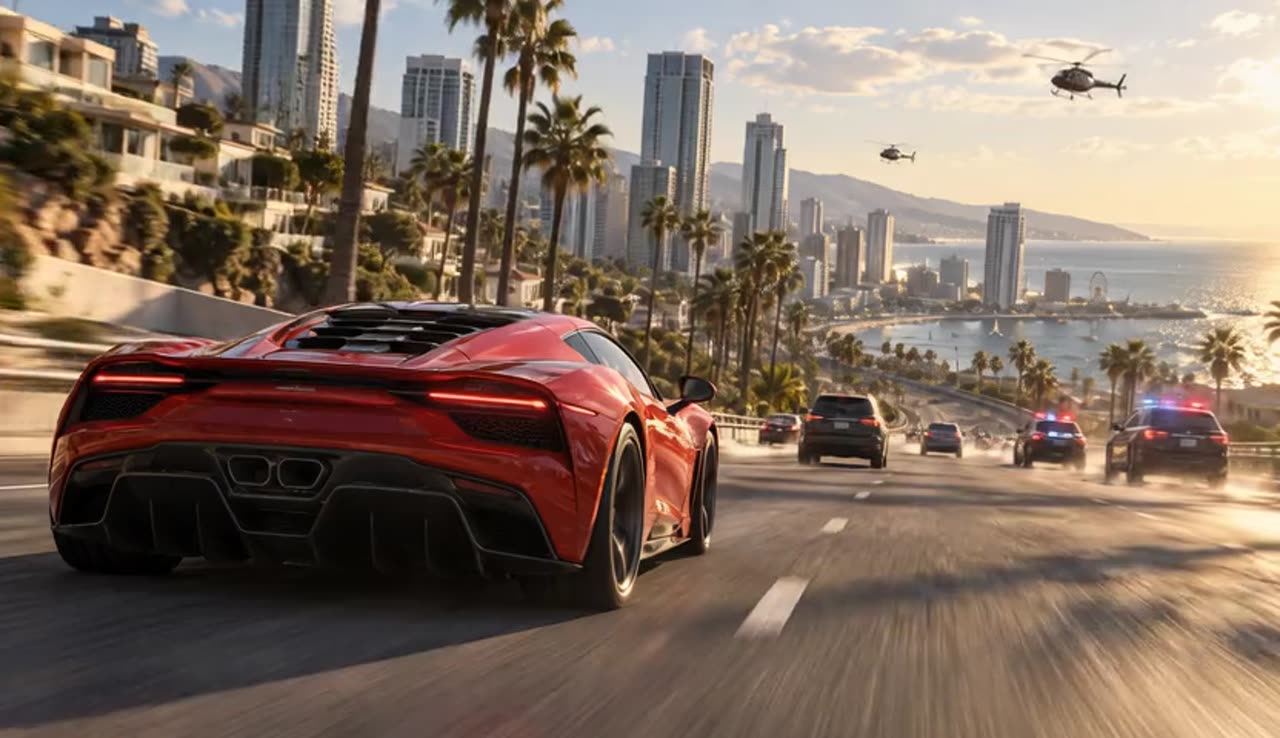
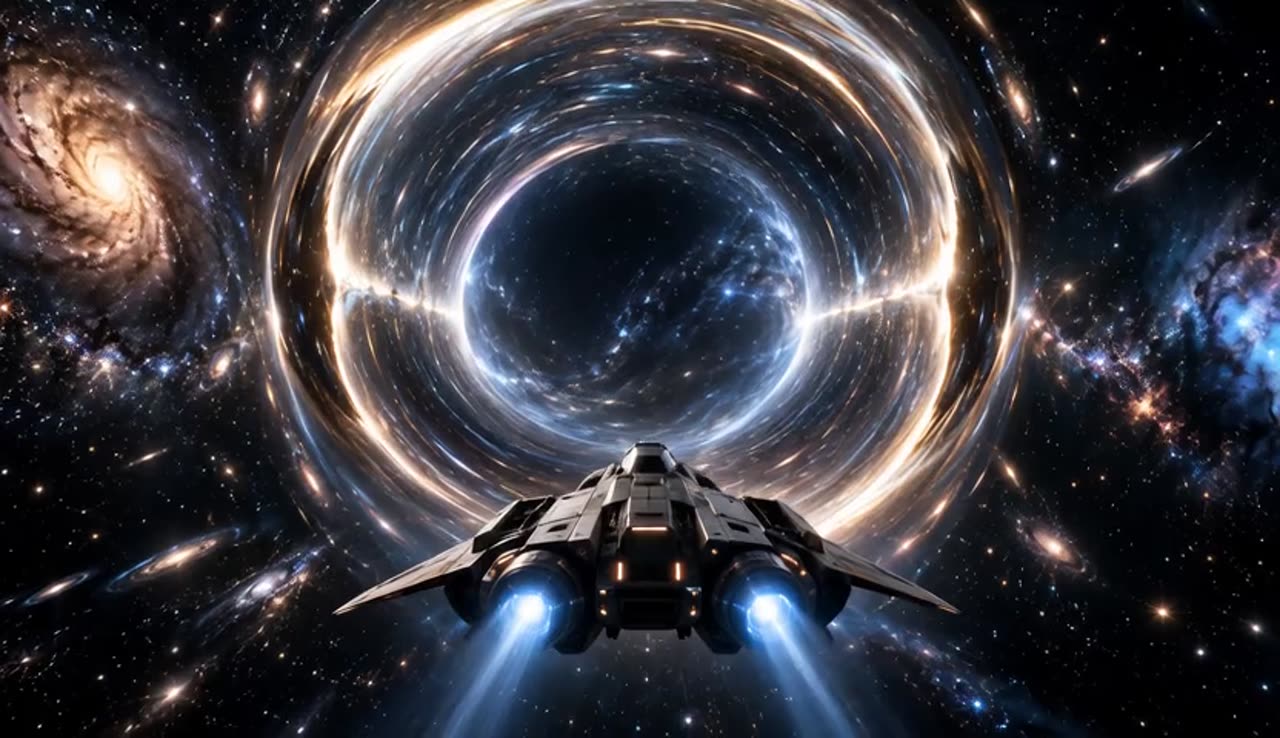
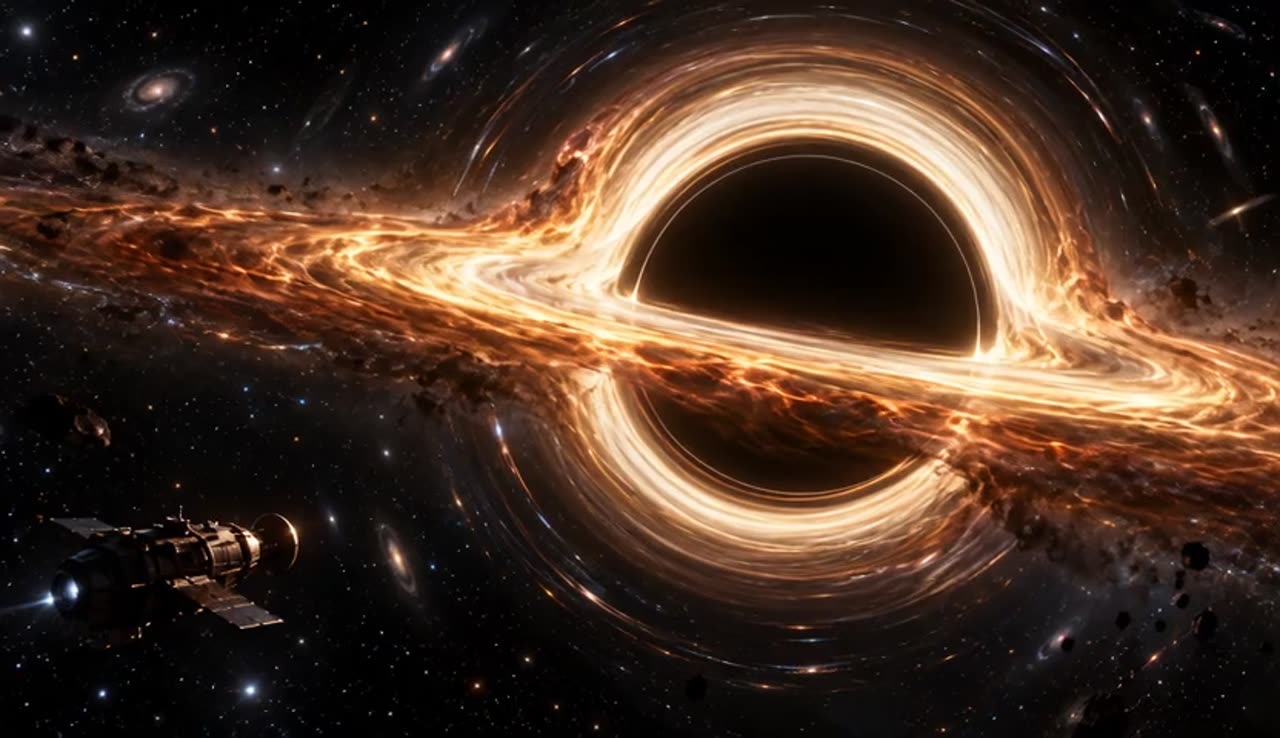
Every clip is generated by these weights. Click a frame to play it on the project page.
 |
 |
 |
 |
 |
 |
 |
 |
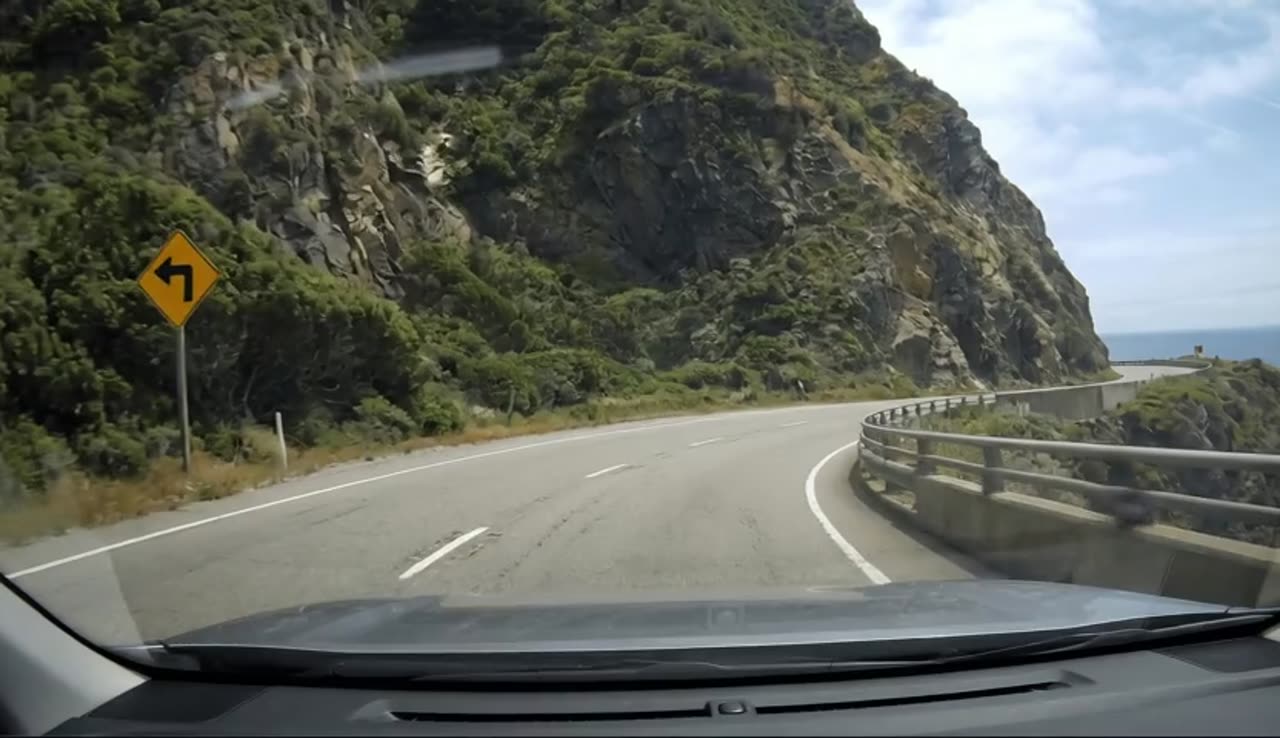 |
Each frame in the montage below is a separate project output; the full gallery, including 33-second rollouts and action-controlled driving, is on the project page.

The model
Given text or a first frame, the model consumes frame-aligned camera trajectories, a 64-dimensional continuous action stream and an embodiment identifier to predict future visual states under control. Cameras are injected with PRoPE in all 30 Transformer layers; actions modulate every layer. Beyond steering a rollout, the framework exposes an open action-sequence output head — see Action-sequence output.
| Value | |
|---|---|
| Parameters | 5.35B |
| Backbone | Wan2.2-TI2V-5B, 30 layers, hidden 3072, 24 heads, FFN 14,336 |
| Latent | 48 channels, VAE 4x temporal, 16x16 spatial |
| Conditioning | text, first frame, camera intrinsics/extrinsics (PRoPE), 64-D continuous action + 32 embodiment IDs, event text |
| Causal form | block-causal attention with cross-block KV cache, 8 latent frames per block, 20-frame local window + 4 persistent sink frames, frustum-overlap retrieval for revisit trajectories |
| Bidirectional form | full spatiotemporal attention over the clip, 20 latent frames |
| Output | 832x480 at 24 fps; a 1280x704 preset uses the same weights |
| Hardware | trained on 2x NVIDIA L20 48 GB, runs on 1x L20 48 GB |
Five training stages, all on two L20 48 GB GPUs (Section 6 of the report): bidirectional control adaptation, block-causal conversion, online UniPC trajectory distillation, mixed-domain causal SFT, and asymmetric DMD/DMD2.
What is in this repository
Everything the model loads is here, so nothing has to be fetched from the Wan2.2 release separately.
| Path | Contents |
|---|---|
model-0000{1,2,3}-of-00003.safetensors, model.safetensors.index.json |
the denoiser, bf16, 5.35B parameters, ~10.7 GB — one set of weights for both sampling modes |
transformer/config.json |
the module definition the denoiser is built from |
vae/ |
Wan2.2 VAE, 48 channels, 4x16x16 |
text_encoder/, tokenizer/ |
UMT5-xxl |
config.json |
this release's metadata: model kwargs, validated inference settings, provenance |
The export is merged: the LoRA adapters are folded into the weights, so there is no adapter file to load alongside and
no lora entry in the configuration. The checkpoint carries 898 tensors — the 825 of the Wan2.2 backbone, the camera
(PRoPE) and action-input grafts, and the 6 action-output head tensors described below — so both sampling forms load
it with no missing weights. config.json records the head under action_output_head.
The VAE, the text encoder and the tokenizer are the Wan2.2-TI2V-5B components, redistributed here under the same Apache-2.0 licence for convenience.
Quick start
The code release ships the streaming pipeline, the sampling presets and the post-training recipes. It loads everything from this directory:
git clone https://github.com/Astronex-Robotics/Astronex-World
cd Astronex-World
pip install -r requirements.txt

huggingface-cli download Astronex-Lab/Astronex-World --local-dir ../Astronex
python scripts/check_weights.py                # denoiser, module definition, VAE, text encoder

bash scripts/infer_t2v.sh                      # text-to-video, no reference image
bash scripts/infer_causal.sh                   # image-to-video, streaming rollout, 8 steps
bash scripts/infer_bidirectional.sh            # full-attention form, same weights
bash scripts/infer_event.sh                    # caption switch partway through a rollout
bash scripts/infer_causal_consumer.sh          # same output inside 24 GB of VRAM
Or build the denoiser directly and load the shards into it:
import glob, json
from safetensors.torch import load_file
from models.wan_wrapper import WanDiffusionWrapper   # from the code release

cfg = json.load(open("config.json"))
model = WanDiffusionWrapper(**cfg["model_kwargs"], model_root=".",
                            model_name="transformer", base_dtype="bfloat16")

state = {}
for shard in sorted(glob.glob("model-*-of-*.safetensors")):
    state.update(load_file(shard))
model.load_state_dict(state)          # 898 tensors, exact match
Sampling settings that matter
config.json carries the settings these weights were validated under:
- 8 UniPC steps is the validated setting, with CFG 3.0 and an 8-frame inference block. The sampler also accepts 4 steps for latency experiments; quality is lower and 8 steps is what the released material uses.
- Window 20 + sink 4 + retrieval. The KV window is
sink + recent history + current block, and the retrieval path scores evicted history frames by camera-frustum overlap so a revisited place can be redrawn. Sink and window are properties of the weights: sampling them with a different geometry changes the model's behaviour, so change them together rather than one at a time. - Frames arrive in whole blocks. Generate in multiples of 8 latent frames (23 pixel-frame steps, not 20, once the i2v reference frame is counted).
Generation runs in the compressed video latent space; the VAE is used only for input encoding and final decoding. Cameras enter PRoPE as intrinsics plus world-to-camera transforms, with pixel-space intrinsics normalised by the source width and height.
Action-sequence output (open post-training head)
The action pathway is bidirectional by design. One direction is action input: a commanded 64-D action steers the
rollout. The other — action_output — is public in this framework and lets the model report the action it depicted,
which is what makes the representation usable as an inverse-dynamics readout for driving and robot control.
| Interface | |
|---|---|
| Head | LayerNorm -> Linear(dim, hidden) -> SiLU -> Linear(hidden, 64), output layer zero-initialised so inserting it leaves the model unchanged |
| Input | spatial hidden tokens mean-pooled per latent frame: (B, L, dim) -> (B, F, 64) |
| Output | 64-D action vector per latent frame; trained with MSE on masked samples so the head cannot copy its input |
| Install / train | model_kwargs.action_output: true installs the head; the action recipe in the code release trains it |
bash scripts/post_train_action.sh --data <lmdb dir> # action in and out, backbone frozen
One setting decides whether the run means anything: action_output_input_dropout: 1.0 withholds the commanded action
from the head's input, so the head has to read the frames rather than its own conditioning. Embodiment-specific adapters
then connect the generic 64-D interface to joints, end effectors, grippers or a mobile base — for driving, ego
trajectory, steering, speed and throttle/brake go into the same 64-D stream.
The head ships in this repository as six zero-initialised tensors, so the parameters exist and are trainable as they stand. Untrained it returns zeros; once trained it doubles as a probe, since a head that recovers the action from generated frames is direct evidence that the action conditioning is steering the rollout.
Benchmarks
WBench — 289 cases, 1,058 interaction rounds, official evaluation code and default VLM judge, 8-step causal form. Each case is generated as one continuous sequence rather than restarted as i2v after every round.
| Split | Average | Quality | Setting | Interaction | Consistency | Physical |
|---|---|---|---|---|---|---|
| Navi 158 | 73.5 | 78.2 | 73.5 | 63.4 | 83.6 | 68.6 |
| Full 289 | 70.0 | 78.3 | 73.8 | 47.6 | 82.4 | 68.1 |
Navi 158 measures navigation only; Full 289 also covers event editing, subject action and perspective switching. Against the open models on the WBench leaderboard (snapshot of 13 September 2026; peer scores from the leaderboard, Astronex-World evaluated by us with the official code), † post-trained from a Wan prior:
| Model | Params | Training GPUs | Avg. | Qual. | Set. | Inter. | Cons. | Phys. |
|---|---|---|---|---|---|---|---|---|
| Kairos 3.0 | 4B | n/r | 65.7 | 73.1 | 70.3 | 41.6 | 83.2 | 60.5 |
| YUME 1.5† | 5B | NVIDIA A100 | 68.9 | 77.6 | 72.4 | 48.4 | 80.9 | 65.4 |
| Astronex-World 1.0† | 5B | 2x L20 48 GB | 70.0 | 78.3 | 73.8 | 47.6 | 82.4 | 68.1 |
| HY-Video 1.5 | 8.3B | n/r | 74.3 | 76.6 | 85.6 | 54.7 | 87.5 | 67.1 |
| LongCat-Video | 13.6B | n/r | 69.9 | 77.2 | 72.3 | 45.1 | 86.6 | 68.4 |
| Helios (distilled)† | 14B | 64-128x H100 | 69.7 | 73.3 | 75.3 | 41.6 | 82.2 | 76.1 |
| LTX-2.3 | 22B | n/r | 70.9 | 77.0 | 85.2 | 49.4 | 78.0 | 65.1 |
Among 5B-class models this one is above YUME 1.5, post-trained from the same Wan2.2 prior on A100s, and above the 4B Kairos 3.0 by 4.3 points. With a third or less of the parameters it is above LongCat-Video (13.6B) and Helios (14B) — Helios uses 64 to 128 H100s per training stage — and within 0.9 points of LTX-2.3 (22B). Quality 78.3 is the highest in the table, on two L20 48 GB GPUs.
VBench 1.0 — official evaluation code, official prompt order, no sampling or selection. A partial run: 240 of 6,220 text-to-video and 118 of 5,590 image-to-video videos had been generated and scored at the time of the report (125 frames, 832x480, 24 fps, 8-step UniPC).
| Dimension | Text-to-video | Image-to-video |
|---|---|---|
| Imaging quality | 0.715 | 0.738 |
| Aesthetic quality | 0.508 | 0.473 |
| Motion smoothness | 0.990 | — |
| Temporal flickering | 0.987 | 0.995 |
| Dynamic degree | 0.254 | — |
| Overall consistency | 0.220 | — |
| Background consistency | — | 0.985 |
| I2V background | — | 0.997 |
| Camera motion | — | 0.485 |
Smoothness, flicker and background preservation are the strongest axes, which is what block-causal KV caching, the local window and the persistent sink frames are built for. Both forms ship: causal for interaction and length, bidirectional when the motion has to be exact.
Speed
Real-time on a single NVIDIA L20 48 GB: the causal form streams block by block with cross-block KV caching and few-step UniPC sampling, so frames leave the sampler as the rollout is produced instead of after the whole clip is denoised. The 4-step path and the 720p preset (same weights, larger frame) are the levers for trading quality against latency.
Citation
@techreport{astronexworld2026,
  title  = {Astronex-World 1.0: Real-Time Interactive World Model Foundation},
  author = {Zhou, Xin and Miao, Cong},
  year   = {2026},
  institution = {Astronex Robotics},
  url    = {https://world.astronex.com.cn/assets/paper/astronex-world-technical-report.pdf}
}
License
Released under the Apache License, Version 2.0 — see LICENSE. Copyright 2026 Astronex Robotics.
- Downloads last month
- 93
Model tree for Astronex-Lab/Astronex-World
Base model
Wan-AI/Wan2.2-TI2V-5B